
Septic Installations
Systems We Install

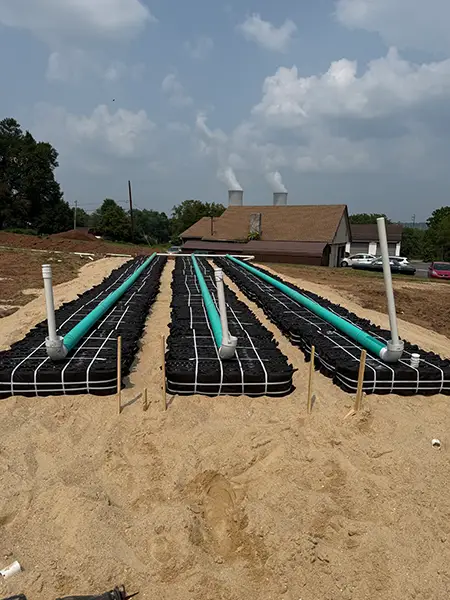
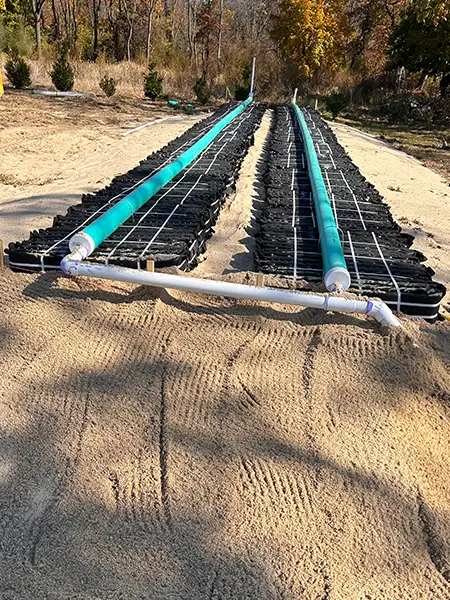
ELJEN GEOTEXTILE SAND FILTER SYSTEMS (GSF)
Eljen GSF systems use a two-stage treatment process combining proprietary geotextile modules with a sand layer to create enhanced filtration and biological treatment. Each module is wrapped in a fabric that promotes oxygen flow, allowing aerobic bacteria to thrive.
How It Works
- Effluent flows from the septic tank into the GSF modules.
- The geotextile fabric spreads wastewater evenly across the module.
- Air movement through the fabric promotes aerobic bacterial digestion.
- Treated wastewater then passes into a sand layer below for polishing before entering the soil.
Why It’s Installed
- Works extremely well on tight lots, slopes, and restricted properties.
- Excellent for poor or variable soils, especially where percolation rates are too slow or too fast.
- Reduces the size of the drainfield by as much as 40%.
Strengths
- Highly reliable treatment technology
- Smaller footprint = less impact on landscaping
- Handles hydraulic overloads better than conventional systems
Limitations
- Requires high-quality sand that meets specification
- Needs careful installation to avoid uneven distribution
- Periodic inspections of modules and sand layer recommended
Ideal Applications
- Residential lots with limited space
- Commercial properties with small treatment areas
- Waterfront properties and environmentally sensitive zones
- Replacement system where existing soil is unsuitable
ECOFLO BIOFILTER / ECO FLOW SYSTEMS
Ecoflo uses a fixed organic or synthetic filtering media inside a fiberglass or polyethylene shell. The media provides long-lasting treatment by supporting a highly active microbial film.
How It Works
- Pre-treated wastewater from the septic tank enters the Ecoflo module.
- Wastewater is dispersed over a filtering medium (coconut husk, peat, or synthetic).
- Microbial colonies on the media treat the wastewater biologically.
- Clean, high-quality effluent leaves the module and flows to the soil absorption area.
Why It’s Installed
- Often required when environmental standards or health department regulations demand advanced treatment.
- Protects groundwater near wells, lakes, streams, and waterways.
- Reduces the required size of the drainfield.
Strengths
- Very high effluent quality
- Long-lasting media choices
- Passive system requiring no energy in the module itself
- Minimal odor and extremely quiet operation
Limitations
- Media must eventually be replaced (usually 8–15 years depending on loading)
- Needs periodic inspections and cleaning of distribution devices
- Higher upfront cost compared to basic systems
Ideal Applications
- Lakeside properties
- High-density neighborhoods
- Small commercial buildings (offices, daycares, schools)
- Properties with limited usable soil
JET WASTEWATER AEROBIC TREATMENT SYSTEMS
Jet systems are complete aerobic treatment units (ATU) engineered to rapidly oxidize and break down solids using high levels of dissolved oxygen. These behave similar to small municipal treatment plants.
How It Works
- Wastewater enters a three-chamber aeration tank.
- An aerator continuously injects oxygen to support aerobic bacteria.
- Bacteria digest organic materials, clarifying wastewater.
- Treated effluent flows to a clarifier, then to the soil or discharge system.
Why It’s Installed
- High-strength waste or high-usage buildings
- Sites with no soil absorption ability
- Requirements for enhanced effluent clarity before discharge
Strengths
- Excellent for restaurants, multi-family housing, commercial properties
- Breaks down solids extremely efficiently
- Reduces organic load on the drainfield dramatically
- Helps extend the life of an older absorption area
Limitations
- Requires electricity for the aerator
- Needs regular servicing every 6–12 months
- More moving parts = more maintenance than passive systems
Ideal Applications
- Commercial buildings with high wastewater output
- Multi-unit dwellings
- Properties with extremely poor soil
- Long-term replacement of failing systems
NORWECO AEROBIC TREATMENT SYSTEMS
Norweco systems use multi-stage aerobic treatment, including pretreatment, aeration, clarification, disinfection, and flow equalization. These systems are engineered for consistent, high-quality effluent with long-term durability.
How It Works
- Pretreatment chamber removes solids.
- Aeration chamber adds oxygen using a high-efficiency aerator.
- Clarification chamber allows solids to settle out.
- Disinfection unit kills pathogens (tablets or UV).
- Clean effluent exits to the drainfield or dispersal system.
Why It’s Installed
- Required by many municipalities where stricter discharge limits exist.
- Ideal for high-traffic commercial buildings.
- Produces exceptional water clarity, reducing environmental risk.
Strengths
- Reliable, proven technology
- Quiet, energy-efficient design
- Very clean effluent output
- Great for areas with sensitive groundwater
Limitations
- Requires ongoing service agreements
- Periodic replacement of aeration units, diffusers, and chlorine
- Higher installation cost
Ideal Applications
- Restaurants, offices, apartment buildings
- Properties with no usable soil for conventional dispersal
- Areas requiring surface discharge (where legal)
- Replacement of overloaded or outdated systems
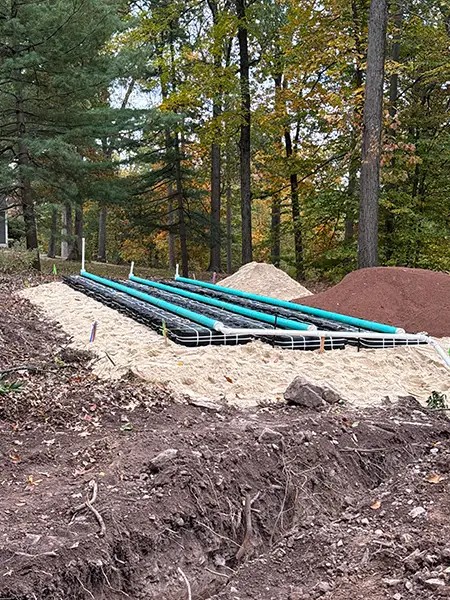
AT-GRADE BED SYSTEMS
At-grade systems create an elevated absorption area directly on the natural soil surface using imported sand and gravel. These are engineered systems used when soil is shallow but still capable of treatment.
How It Works
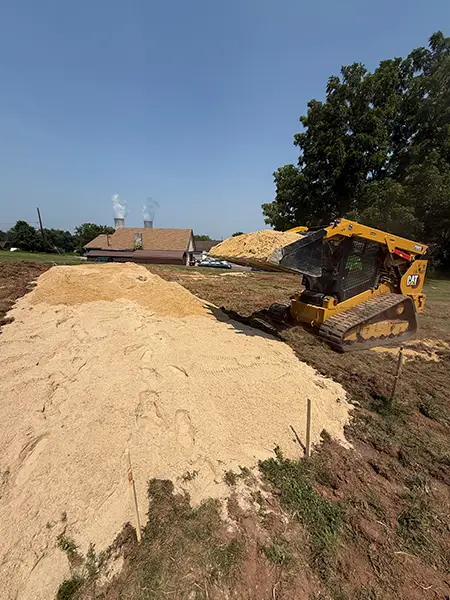
- Sand is placed over the existing soil.
- A gravel bed with distribution piping is built on the sand.
- Effluent is pumped evenly across the bed.
- Wastewater travels through the sand and natural soil for treatment.
Why It’s Installed
- When soil depth is inadequate for a standard system.
- When restrictive layers are present but not shallow enough to require a full sand mound.
- When minimal excavation is preferred.
Strengths
- Less intrusive than a mound system
- Lower profile, more visually appealing
- Excellent when soil has moderate limitations
Limitations
- Still requires a pump
- Requires imported sand meeting strict specs
- Needs careful construction to avoid uneven settling
Ideal Applications
- Residential homes on shallow restrictive soils
- Commercial buildings where raising site elevation is limited
- Replacement systems with moderate soil issues
- Sites requiring engineered wastewater solutions
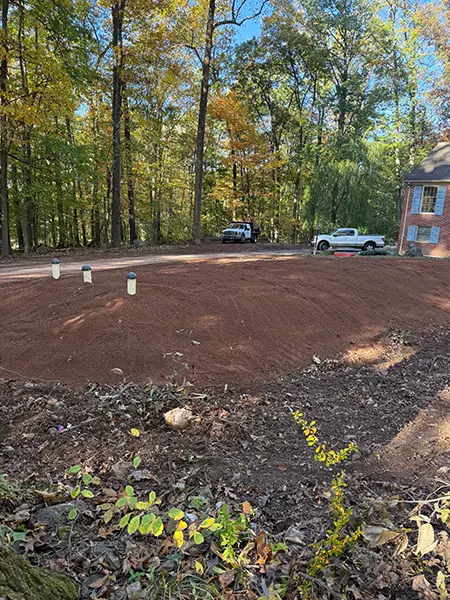
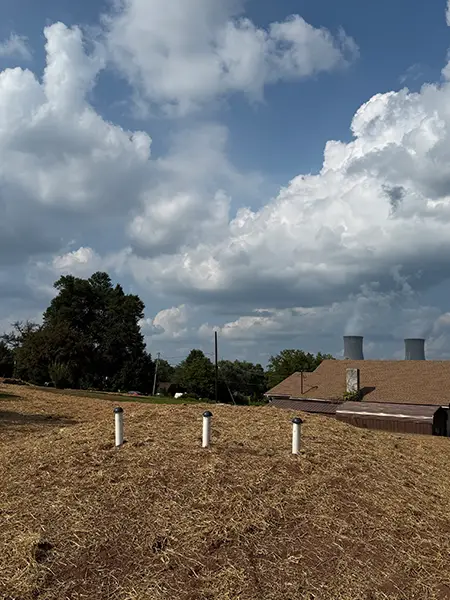
SAND MOUND SYSTEMS
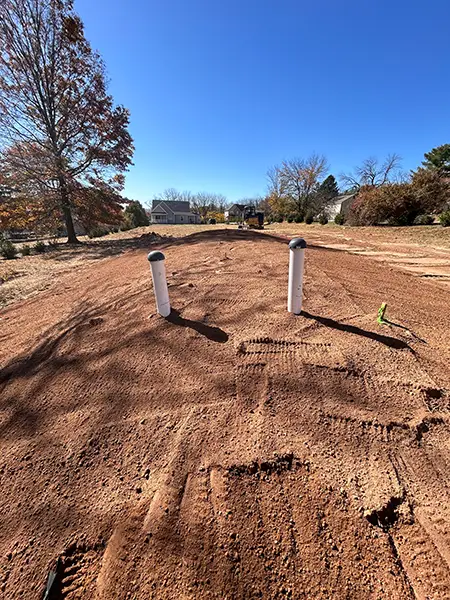
Sand mounds are fully elevated engineered septic systems built when the natural soil cannot safely treat wastewater. These are used on the most difficult sites and require precise engineering and installation.
How It Works
- A pump tank doses effluent into a gravel bed atop a large sand mound.
- Wastewater is evenly distributed across the mound.
- Effluent trickles down through the sand, receiving treatment.
- Treated water enters the natural soil below.
Why It’s Installed
- When groundwater is too high
- When bedrock is too shallow
- When the soil is clay or non-absorbent
- When no other design will meet regulations
Strengths
- Permits development on extremely difficult sites
- Highly reliable when engineered properly
- Long treatment path provides excellent purification
Limitations
- Can be visually noticeable due to height
- Requires consistent pumping
- Needs high-quality imported sand
- Installation must meet engineering standards exactly
Ideal Applications
- Residential and commercial lots with major soil limitations
- New construction on land previously considered unusable
- Areas with high water tables
- Properties requiring long-term, engineered wastewater treatment
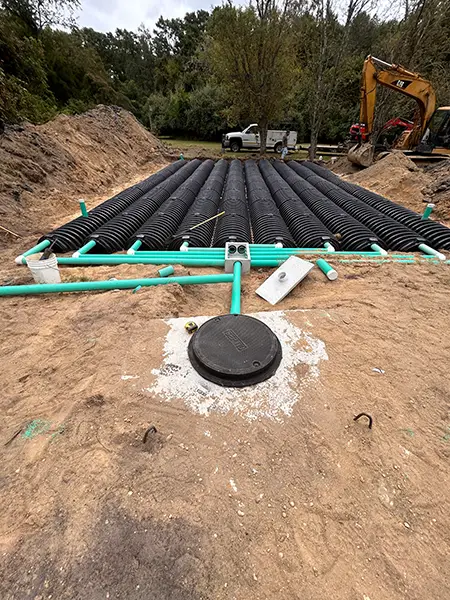
INFILTRATOR CHAMBER CONVENTIONAL SYSTEMS
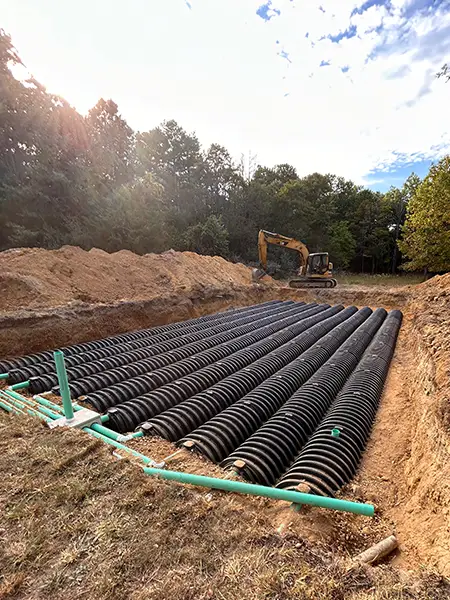
Infiltrator systems are a modern alternative to the traditional stone-and-pipe drainfield. Instead of hauling in tons of clean stone, lightweight plastic chambers create an open vaulted trench that stores effluent, promotes aeration, and disperses wastewater evenly into the natural soil. These systems are widely approved in Pennsylvania for sites with suitable soil depth and percolation.
How It Works
- Effluent flows from the septic tank into the chamber trenches.
- The open-bottom chamber allows wastewater to spread evenly across the natural soil.
- Air movement within the chamber promotes healthy bacterial activity.
- Effluent gradually moves into the surrounding soil for final treatment.
Why It’s Installed
- Faster installation with no stone required
- Cost-effective and reliable for standard soil conditions
- Provides large storage volume and strong aeration
- Commonly approved for both new systems and replacements
Strengths
- Lightweight chambers install quickly
- Increased storage helps during peak household use
- No gravel hauling = cleaner jobsite and lower cost
- Proven performance in conventional soil-based systems
Limitations
- Requires suitable natural soil depth
- Not ideal for high water tables or poor percolation
- Must be installed level to avoid uneven distribution
Ideal Applications
- Residential homes with good soils
- Replacement systems where space is available
- Conventional trench systems looking for a modern upgrade
- Projects needing quick, cost-effective installation
Brands We Install






Gallery


Ready to Get Started?
